


DEADBOOT - ULTRAKAOS Games
Game Design | Narrative Design
DEADBOOT is a fast-paced retro roguelike FPS. Blast through randomized levels, scavenge weapons and upgrades along the way, and see how far you can make it in this neon death zone.

JOINING
I first came across DEADBOOT during a playtesting event in Stockholm. Out of all the projects there, DEADBOOT immediately stood out to me. I sat down with one of the developers, played through the build, and shared feedback on the experience while we spoke more broadly about the project and its production.
As we spoke, it became clear that the narrative was still an underdeveloped part of the project. The team had a strong gameplay foundation, but little internal experience in shaping its narrative layer. Seeing both the game’s potential and a clear area where I could contribute, I offered my support.
Not long after, I joined ULTRAKAOS Games as a Game Designer, with a primary focus on strengthening the game’s narrative fidelity and helping shape a clearer, more cohesive world around its action-driven core.
Since then, I have contributed to the project through cinematics, lore, worldbuilding, character work, narrative exposition, and hub development, while also taking part in broader game design sessions and production discussions.
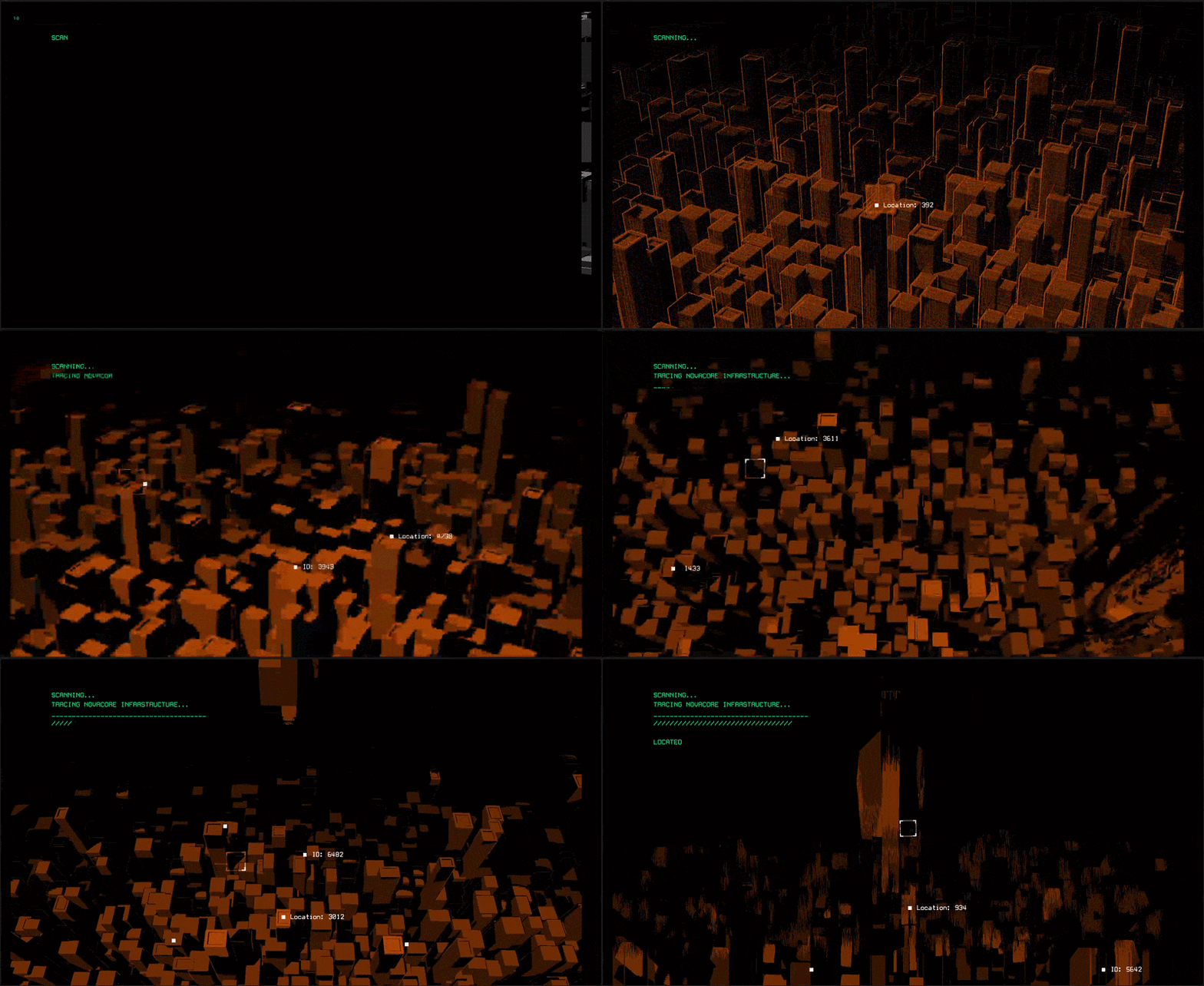

NARRATIVE & CINEMATICS
A central narrative challenge in DEADBOOT was finding ways to bring clarity and meaning to a game that places most of its emphasis on fast, action-packed gameplay. Because the player’s agency and momentum are so important to the experience, the space for exposition was very limited. My task was to find an efficient balance between narrative clarity, visual interest, and pacing, so that the game could establish its world and conflict without overstaying its welcome.
The team had already built a simple introduction around the perspective of a computer interface scanning the city, locating Novacore infrastructure, and identifying a valid subject for the Deadboot protocol. Even in its rougher form, I felt the concept had potential. I chose to preserve that perspective, but rework it into a more developed 3D cinematic that could better deliver atmosphere, narrative value, and visual identity.
In shaping the sequence, I worked around three main narrative goals: to establish the player’s rival, to clearly identify their target and objective, and to communicate the meaning of the Deadboot protocol and, by extension, who the player is. By building the cinematic around those pillars, I aimed to create an exposition sequence that remains efficient and readable, while still giving the player enough context to make the action ahead feel motivated and purposeful.
THE HUB
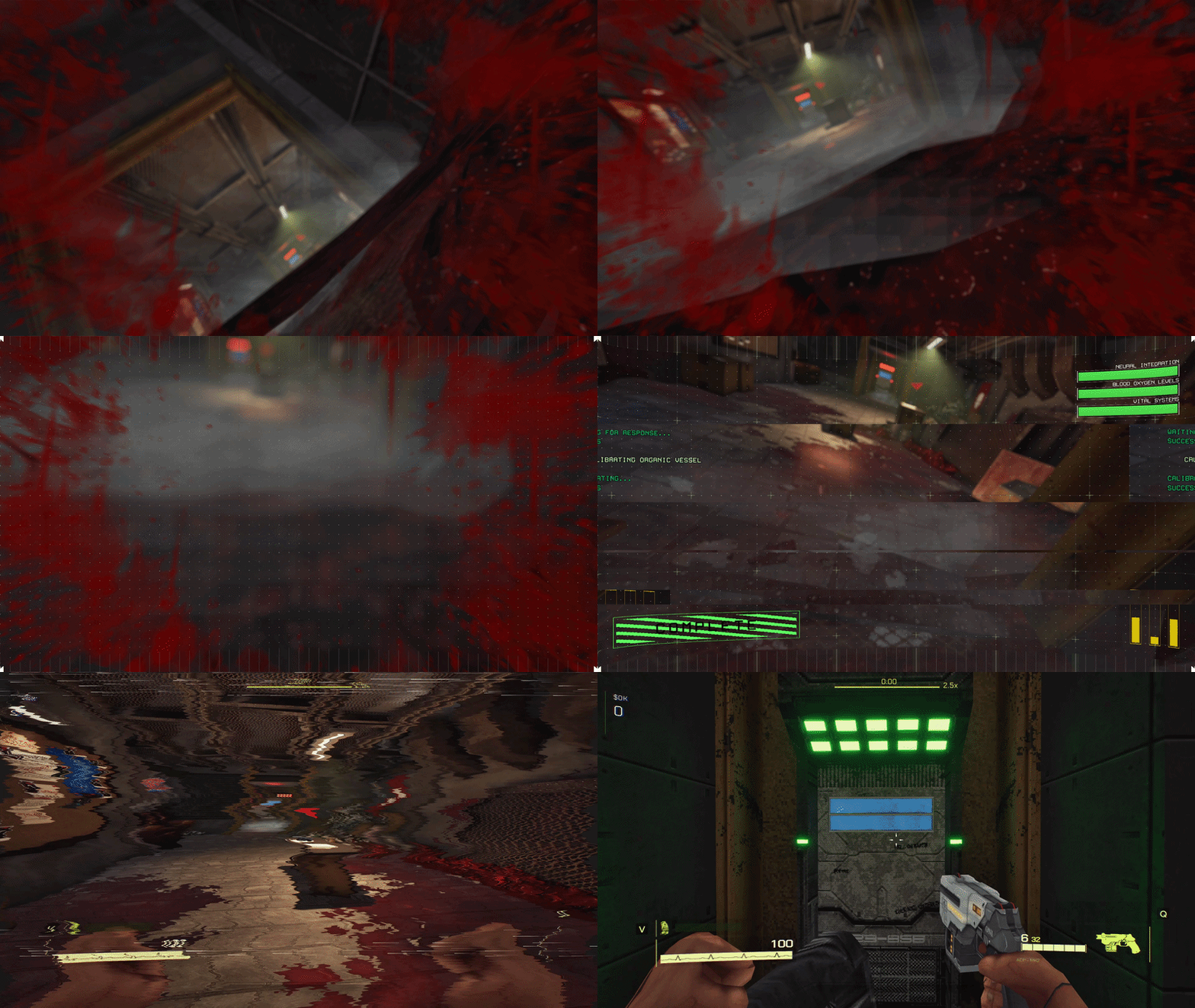
When I joined the project, DEADBOOT lacked a grounded starting point between runs and a space where players could pause, reorient themselves, and reconnect with the world before jumping back into the action.
After evaluating similar titles across the genre, we decided that introducing a dedicated hub area would strengthen both the player experience and the narrative. I designed the space as a hidden rebel safehouse beneath a corporate mass grave, where every viable vessel recovered for the DEADBOOT Protocol is brought before being deployed on another run.
The hub serves several purposes. It gives players an opportunity to revisit their objective, track their progression, and prepare for what lies ahead, while reinforcing the game's worldbuilding through a location that feels both functional and narratively grounded.


MISSION BOARD
The bulletin board was originally envisioned as a supporting narrative device. Because the introduction cinematic had limited room for exposition, we explored the idea of using a large board in the hub to give players a place to return to for deeper lore, worldbuilding, and context around the conflict.
Over time, that concept had to be rethought. As the project placed greater emphasis on gameplay-focused features, a board filled with text risked disrupting pacing and becoming more distracting than useful. On top of that, the game’s pixelated art direction made diegetic documents difficult to present in a readable way without compromising texel density or visual consistency.

To solve this, I reimagined the board as a diegetic progression overview system. Retaining the original bulletin board format, I used pinned notes, photographs, simple documents, and other visual markers to track the player’s journey through the game. Sections of the board update to reflect discovered enemies, unlocked floors, repeated attempts, and selected pieces of mission-critical information.
This shift allowed the board to remain grounded in the world while serving a clearer gameplay purpose. Rather than slowing the player down with dense exposition, it reinforces the mission, reflects progression, and reminds the player that there is still more ahead to uncover.
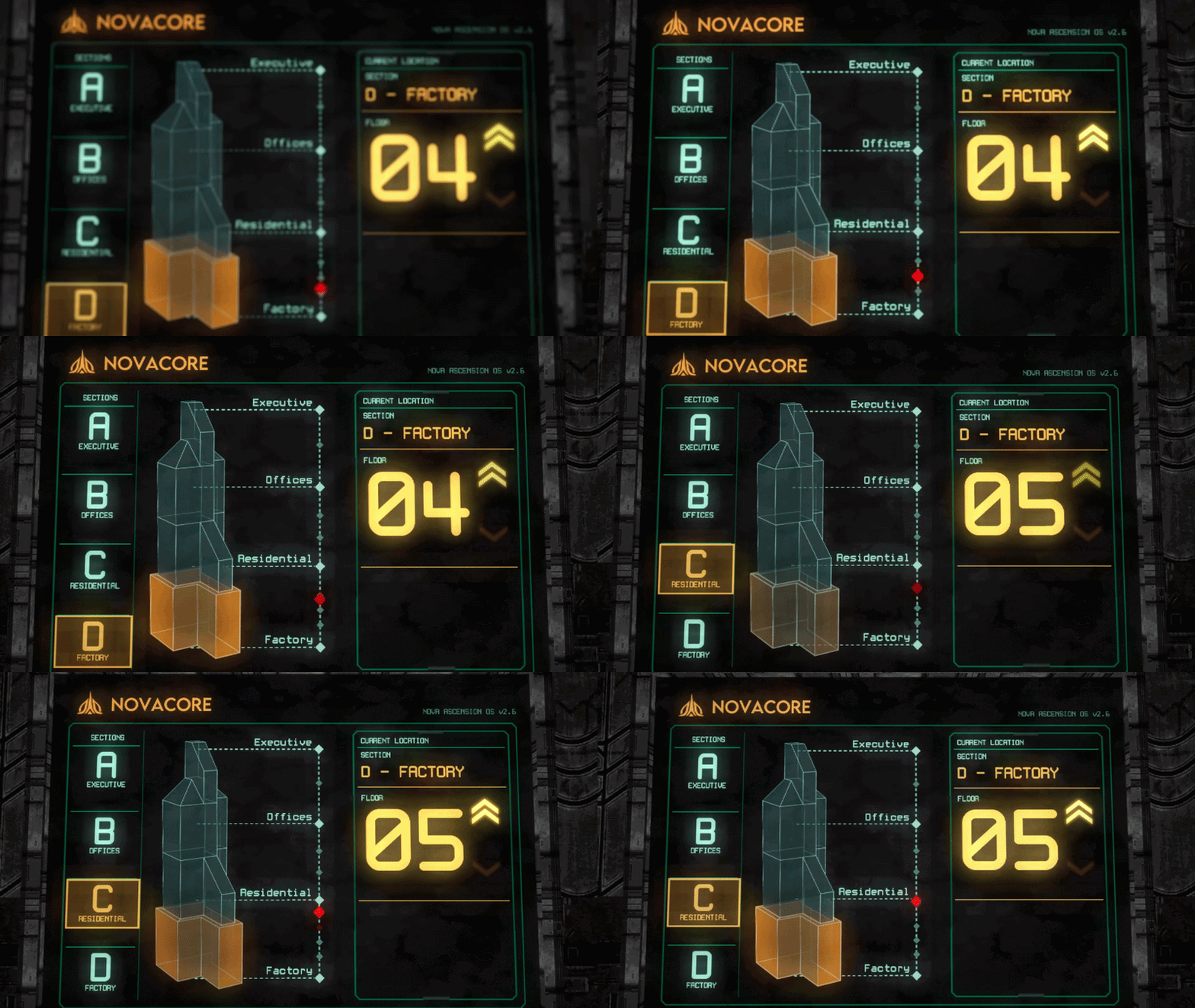
UI, GAMEPLAY, LEVELS, AND MORE TO COME!
